
Musculoskeletal Consultation & Injury Rehabilitation.
Understand your injury.
Build a plan.
Return to what you love.
Whether you are dealing with a recent injury, persistent pain, reduced mobility, or struggling to return to sport or exercise, your assessment will focus on identifying the factors contributing to your symptoms and creating a clear pathway forward.
Using a combination of clinical assessment, movement analysis, strength testing and evidence-informed rehabilitation, we help you understand your condition and take confident steps towards recovery.
What we help with.
MSK Consultation & Injury Rehabilitation
A personalised approach to understanding your injury, treating your symptoms and rebuilding your strength and capacity.
A musculoskeletal (MSK) consultation is the starting point for understanding your pain, injury or movement problem and developing a clear plan to help you move forward.
Your appointment is not simply about treating the area that hurts. We take a wider view of your symptoms, how you move, your physical capacity and the demands you want to return to. This allows us to understand the factors that may be contributing to your problem and determine the most appropriate approach to treatment and rehabilitation.
Your consultation may include:
A detailed discussion about your symptoms, injury history, lifestyle and goals.
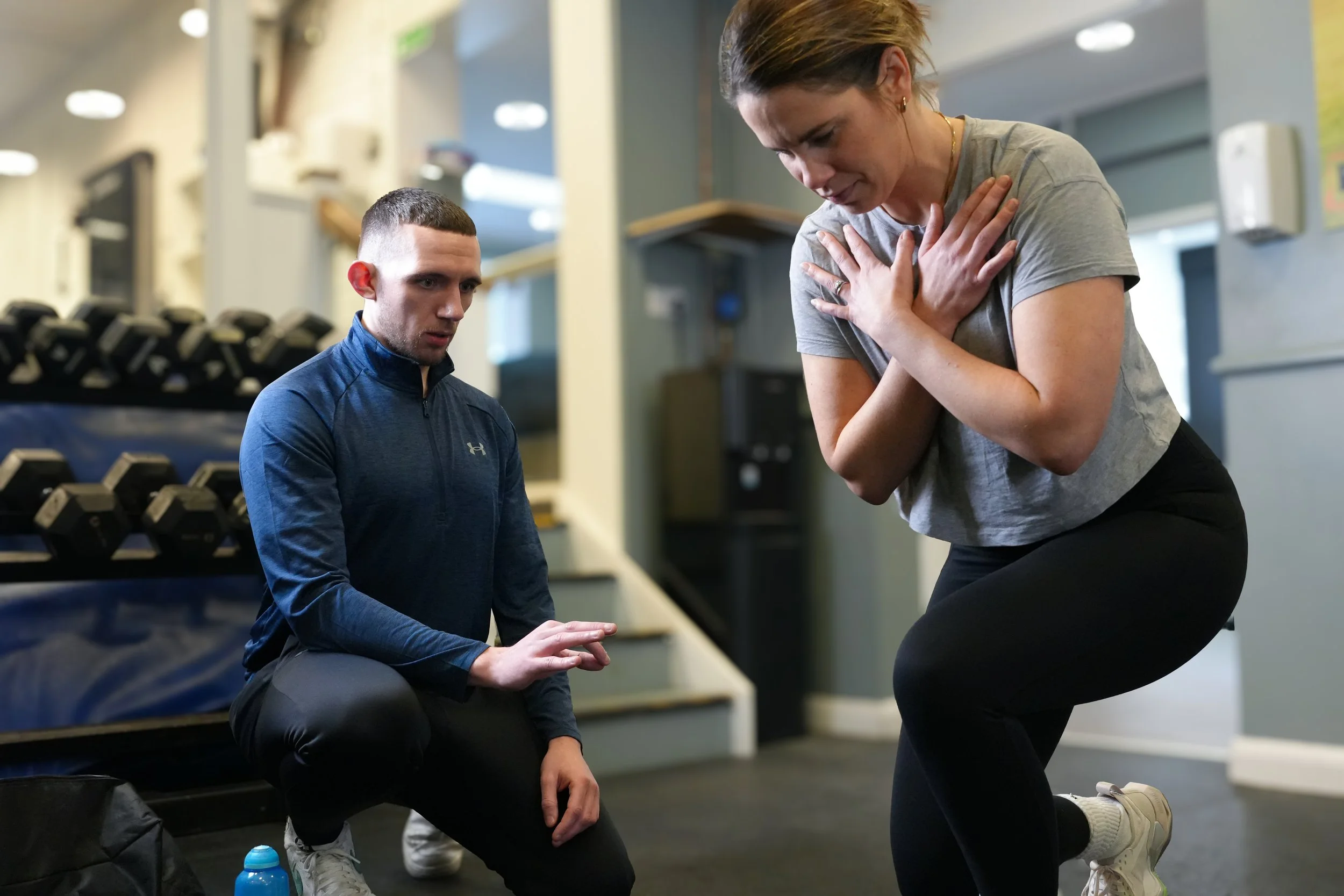
Observation and movement assessment to identify relevant movement patterns and limitations.
Strength and capacity assessment where appropriate.
Hands-on assessment and treatment where clinically appropriate.
Education and advice to help you understand your symptoms and what you can do to manage them.
A personalised rehabilitation plan designed around your current ability, your goals and the demands you want to return to.
Rehabilitation is a key part of the process. Rather than simply aiming to reduce your symptoms, we work progressively to improve strength, movement, confidence and physical capacity so you can return to the activities that matter to you.
Your treatment may therefore combine hands-on techniques, exercise rehabilitation, education and, where appropriate, objective testing such as ForceDecks to help monitor your progress.
What happens during your appointment?
Understanding Your Problem
We begin by discussing your symptoms, injury history, lifestyle, training and goals. We'll explore how your problem is affecting you and what you want to be able to get back to doing.
Assessment
We'll then assess the relevant areas based on your symptoms and goals. Depending on your presentation, this may include:
Movement and mobility assessment
Strength and capacity testing
Functional movement tasks
Relevant clinical tests
Observation of your movement or sporting activity
Where appropriate, objective testing can also be used to provide additional information about your current physical capacity.
Treatment & Rehabilitation
Following your assessment, we'll explain our findings and discuss the most appropriate way forward.
Your plan may include:
Education and advice to help you understand and manage your symptoms
Hands-on treatment where appropriate
Progressive exercise rehabilitation
Strength and capacity development
Activity or training modifications
A structured pathway towards your individual goals
Your Next Steps
You'll leave with a clear understanding of what you can do moving forward. Where ongoing rehabilitation is appropriate, we'll progressively adapt your programme as your strength, capacity and confidence improve.
Treatment & Rehabilitation Approaches
Your treatment plan is individualised to your symptoms, goals and current physical capacity. Depending on your assessment findings, it may include a combination of the following approaches:
Exercise Rehabilitation
Progressive exercise programmes designed to improve strength, mobility, confidence and physical capacity, with exercises adapted as you progress.
Manual Therapy
Hands-on techniques may be used where appropriate to help manage symptoms and support movement alongside active rehabilitation.
Dry Needling
Dry needling may be incorporated into your MSK treatment where clinically appropriate. It can be used as part of a wider treatment and rehabilitation approach rather than as a standalone treatment.
Electrotherapy
Electrotherapy may be used where appropriate as an adjunct to your treatment, alongside active rehabilitation and other treatment approaches.
Return-to-Sport Rehabilitation
For athletes and active individuals, rehabilitation can be progressed towards returning to training, competition and performance, with exercise and testing adapted to the demands of your sport.
MSK consultations are suitable for a wide range of people experiencing pain, injury or changes in their movement and physical capacity.
You may benefit from an assessment if you are:
Experiencing a new injury or recent onset of pain
Dealing with persistent or recurring pain
Returning to activity following an injury or surgery
Experiencing reduced strength, mobility or physical capacity
Looking to return to running, the gym or sport
Struggling with a problem that is affecting your everyday activities
Unsure what is causing your symptoms or what you should do next
Looking to build your physical capacity and reduce the risk of future problems
You do not need to be an athlete or have a specific diagnosis to benefit from an MSK consultation.
If something is affecting how you move, exercise or go about your daily life, an assessment can help you understand the problem and identify an appropriate way forward.
Who Can Benefit From an MSK Consultation?
Why Resilient Motion?
At Resilient Motion, we believe effective rehabilitation is about more than simply treating symptoms. Our aim is to understand the individual behind the problem, identify the factors affecting your movement and function, and build the capacity you need to return to the things that matter to you.
We are proud to have built a strong reputation through a personalised approach, clear communication and a commitment to providing a high standard of care. The experiences and feedback of our clients reflect the importance we place on making every appointment valuable, supportive and focused on meaningful progress.
One-to-One Personalised Care
Your assessment and rehabilitation are tailored to your symptoms, goals, lifestyle and physical demands, rather than following a one-size-fits-all approach.
Detailed Assessment
We take the time to understand your symptoms, movement, strength, capacity and the factors that may be contributing to your problem.
Evidence-Informed Rehabilitation
Your rehabilitation is guided by current evidence, clinical reasoning and your individual response to treatment and exercise.
Objective Testing
Where appropriate, objective strength and performance testing, including ForceDecks, can provide measurable information to help guide rehabilitation and monitor your progress.
Education & Communication
We want you to understand your condition and your rehabilitation. Clear explanations and practical advice help you make informed decisions throughout your recovery.
Focus on Long-Term Results
Our goal isn't simply to make you feel better temporarily. We work towards improving your strength, movement, confidence and physical capacity so you can return to the activities you enjoy.
Frequently Asked Questions
-
No. You can self-refer and book an MSK consultation directly with Resilient Motion. You do not need a referral from your GP or another healthcare professional.
-
Your first appointment begins with a detailed discussion about your symptoms, injury history, lifestyle and goals. This is followed by an appropriate physical assessment, which may include movement, mobility, strength and functional testing. We will then explain our findings and agree on an appropriate treatment and rehabilitation plan with you.
-
No. You don't need to have a diagnosis before booking. The purpose of your consultation is to understand your symptoms, assess the relevant factors and help determine the most appropriate way forward.
-
Where appropriate, exercise rehabilitation will form an important part of your treatment plan. Exercises will be selected around your current ability and goals, then progressively adapted as your strength, capacity and confidence improve.
-
In many cases, yes. Complete rest is not always necessary. Where appropriate, we can help you modify your training or activity so you can remain active while progressing your rehabilitation safely.
-
Yes. Where clinically appropriate, hands-on techniques may be incorporated alongside exercise rehabilitation, education and other treatment approaches. The aim is to use hands-on treatment as part of a wider rehabilitation plan rather than relying on it alone.
-
Yes. Dry needling may be incorporated into your MSK treatment where clinically appropriate. It is used as one component of a wider treatment and rehabilitation approach rather than as a standalone treatment.
-
Where appropriate, ForceDecks testing can be incorporated into assessment or rehabilitation. It provides objective information about aspects of strength, force production and physical capacity, helping to guide rehabilitation and monitor progress.
-
This varies depending on your condition, goals and progress. Some people may only require a small number of sessions and appropriate guidance, while others may benefit from a longer period of progressive rehabilitation. Your plan will be reviewed and adapted as you progress.
-
Yes. Rehabilitation can be progressed towards returning to training, sport and performance. Depending on your goals, this may involve progressive strength and capacity work, functional assessment and objective testing to help guide your return.